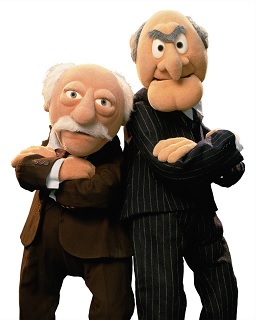
Why Do Statler and Waldorf Always Return to The Muppet Show? The Enduring Mystery of the Muppet Hecklers
From their perch in the upper-right balcony box, two figures have become synonymous with the very essence of The Muppet Show: Statler and Waldorf. These cantankerous critics, with their sharp tongues and even sharper wit, have delivered a constant barrage of sarcastic remarks, groans, and sometimes, even genuine (if self-serving) laughter, at the expense of every performer who has ever graced the Muppet stage. Yet, despite their incessant complaints about the quality of the acts, the writing, and pretty much everything else,
Muppets Waldorf and Statler always return for the next show. This perplexing persistence is not just a running gag; it's a fundamental part of their charm and a question that has amused generations of fans. Why, indeed, do they always come back?
The Iconic Hecklers' Origin Story: A Foundation of Grumpy Genius
The legacy of Statler and Waldorf began even before *The Muppet Show* as we know it. These two elderly gentlemen made their initial appearance in the 1975 television special, *The Muppet Show: Sex and Violence*. Here, they were portrayed as reflective, older men pondering their twilight years, a slightly more subdued version of the raucous critics they would soon become. It wasn't until the full-fledged *Muppet Show* debuted in 1976 that they truly found their iconic role, consistently jeering the entire cast and their performances from their now-legendary box seats.
These beloved characters were the brilliant creation of Jim Henson himself, who initially performed Waldorf. Over the years, numerous talented puppeteers have brought them to life, contributing to their consistent and compelling personalities across various films and television productions within the Muppet franchise. Their memorable names are a nod to two grand New York City hotels, the Statler Hilton and the Waldorf-Astoria, imbuing them with a sense of old-world class, albeit one now dedicated to refined mockery. For a deeper dive into their creation, explore
The Origins of Statler and Waldorf: Jim Henson's Iconic Hecklers.
More Than Just Grumpy Old Men: Their Unique Role in The Muppet Show
Statler and Waldorf are far from one-dimensional. While their primary function is to heckle, the specific targets and nuances of their criticism reveal much about their characters and their integral role in the show's dynamic. Their most frequent victim is, without a doubt, Fozzie Bear. The struggling stand-up comedian bears the brunt of their sharpest barbs, often designed to deflate his already fragile confidence. "Wocka wocka!" Fozzie might exclaim, only to be met with Statler's deadpan, "It's not funny," followed by Waldorf's echoing, "It wasn't funny the first time, either!"
However, the dynamic isn't entirely one-sided. On at least one memorable occasion, Fozzie turned the tables, heckling *them* back, much to the audience's delight. This moment highlighted that their relationship, while antagonistic, is also a peculiar form of engagement. While quick to point out others' flaws, Statler and Waldorf possess a self-assured, almost boundless confidence in their *own* comedic genius. They frequently burst into uproarious laughter at their own comments, often believing their remarks to be far funnier than anything happening on stage.
A fascinating revelation about their personal lives came in the *A Muppet Family Christmas* special, where it was discovered that these two perennial critics are actually friends with Fozzie's mother, Emily Bear. This unexpected connection adds a layer of depth, suggesting that beneath the curmudgeonly exterior, there might be a softer, more complex social network at play. This revelation makes their constant targeting of Fozzie even more intriguing – is it tough love, or simply an old habit they can't break?
The Enigmatic Return: A Muppet Mystery
This brings us back to the central enigma: despite consistently complaining about the show, lamenting how "terrible" the acts are, and suggesting they have better things to do, Statler and Waldorf are always present in their box seats the following week. It's a fundamental paradox of their existence.
The Muppet Show theme song itself immortalizes this mystery. In one version, Waldorf ponders, "Why do we always come here?" to which Statler replies with a shrug, "I guess we'll never know." This line encapsulates the very heart of their appeal: even *they* don't seem to fully grasp the compulsion that draws them back. It's a self-aware joke that makes the audience complicit in the mystery.
Could it be that, despite their verbal disdain, they secretly enjoy the chaos? Perhaps The Muppet Show, for all its perceived flaws, provides them with a consistent source of entertainment – or at least, a consistent source of material for their own jokes. For *muppets waldorf and statler*, attending the show is not just watching; it's participating, performing their own satirical act from the sidelines.
Breaking the Fourth Wall: Blurring Performer and Audience
One of the most sophisticated aspects of Statler and Waldorf's characters is their consistent breaking of the fourth wall. They often acknowledge the fact that they are characters in a television show, making meta-commentary that blurs the lines between audience and performer. Author Ben Underwood aptly observed how these characters generally "blur the boundary between performer and audience," as they are "concurrently audience members and performers."
A classic example of this meta-humor occurred in a second-season incident where the characters actually see themselves watching the Muppets. Statler, ever the skeptic, remarks, "No one would watch junk like that," a hilarious moment of self-deprecating irony that only Statler and Waldorf could pull off. This ability to comment on the show *as* part of the show makes them incredibly unique and gives them a kind of narrative omniscience. They are the audience's stand-ins, vocalizing the thoughts many might have, but also transcending that role by being fully integrated characters. To delve deeper into this fascinating aspect, read
Statler and Waldorf: Muppet Icons Blurring Audience and Performer.
The Psychology of the Perennial Critic
Beyond the fictional narrative, the persistent return of Statler and Waldorf taps into a recognizable human (or Muppet) psychology. Why do people engage with things they claim to dislike?
* **Routine and Comfort:** For some, even negative routines provide a sense of stability. Perhaps the Muppet Show, for all its perceived terribleness, is a predictable and comforting weekly ritual for these two. It's *their* thing.
* **Social Interaction:** Despite their critical nature, their attendance is a form of social engagement. They interact with the show, with each other, and arguably, with the larger Muppet universe. Their presence gives them a role, a purpose, however negative it may seem.
* **A Stage for Their Own Performance:** Statler and Waldorf thrive on being critical. The Muppet Show is their perfect backdrop, providing an endless stream of material for their beloved heckling. It's less about the show's quality and more about their opportunity to shine as comedic commentators.
* **A Twisted Form of Affection:** Could their constant presence hint at a bizarre, unspoken affection for the show and its performers? It's hard to consistently dedicate so much time and energy to something one genuinely despises. Perhaps their "hate" is a peculiar love language, a way of staying connected to a world they secretly enjoy being a part of. After all, if the show were truly awful, wouldn't they simply stay home?
An Enduring Legacy: Why We Love to Hate Them
Statler and Waldorf are more than just side characters; they are an essential ingredient in the Muppets' recipe for success. Their commentary provides a grounded, cynical counterpoint to the boundless optimism and chaotic energy of the main cast. They represent the internal critic, the voice of doubt, yet they do so with such wit and timing that they become endearing.
Their enduring appeal lies in their universality. We all know a Statler and Waldorf – or perhaps, we've all *been* a Statler or Waldorf at some point, offering unsolicited critical commentary from the sidelines. They validate our own tendencies to be cynical, but package it in a way that is ultimately harmless and, most importantly, hilarious. Their mystery, their consistent return, and their unique brand of meta-humor solidify their place as truly iconic figures in popular culture. The
Muppets Waldorf and Statler continue to teach us that sometimes, the greatest form of engagement comes from those who claim to be the most disengaged.
In conclusion, the question of why Statler and Waldorf always return to The Muppet Show remains delightfully unanswered, even by the hecklers themselves. It's a testament to Jim Henson's genius that these characters, defined by their negativity, became so universally loved. Whether it's a peculiar habit, a deep-seated affection masked by sarcasm, or simply their greatest running gag, their perpetual presence in that balcony box is a fundamental part of the Muppet magic. They are the cynical heart of a joyous show, reminding us that even the biggest critics are, in their own way, fans.